Many different bird species have been affiliated with the Seattle's mascot ͏ ͏ ͏ ͏ ͏ ͏ ͏ ͏ ͏ ͏ ͏ ͏ ͏ ͏ ͏ ͏ ͏ ͏ ͏ ͏ ͏ ͏ ͏ ͏ ͏ ͏ ͏ ͏ ͏ ͏ ͏ ͏ ͏ ͏ ͏ ͏ ͏ ͏ ͏ ͏ ͏ ͏ ͏ ͏ ͏ ͏ ͏ ͏ ͏ ͏ ͏ ͏ ͏ ͏ ͏ ͏ ͏ ͏ ͏ ͏ ͏ ͏ ͏ ͏ ͏ ͏ ͏ ͏ ͏ ͏ ͏ ͏ ͏ ͏ ͏ ͏ ͏ ͏ ͏ ͏ ͏ ͏ ͏ ͏ ͏ ͏ ͏ ͏ ͏ ͏ ͏ ͏ ͏ ͏ ͏ ͏ ͏ ͏ ͏ ͏ ͏ ͏ ͏ ͏ ͏ ͏ ͏ ͏ ͏ ͏ ͏ ͏ ͏ ͏ ͏ ͏ ͏ ͏ ͏ ͏ ͏ ͏ ͏ ͏ ͏ ͏ ͏ ͏ ͏ ͏ ͏ ͏ ͏ ͏ ͏ ͏ ͏ ͏ ͏ ͏ ͏ ͏ ͏ ͏ ͏ ͏ ͏ ͏ ͏ ͏
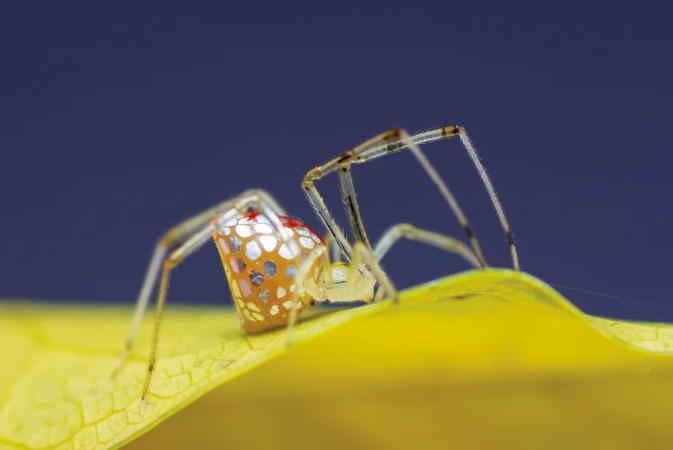
February 6, 2026—The next wave of GLP-1 drugs, fire amoebas and what even is a seahawk? —Robin Lloyd, Contributing Editor | | First, biologist Mason Dean noticed a tiled pattern of hexagons and pentagons in the cartilaginous scales on a ray skeleton. The observation sparked a fruitful search for similar tiling patterns elsewhere in nature. Dean and his colleagues found these "tessellations" in diverse organisms and structures, including on the outer coatings of millet seeds, shark skin and even microscopic amoebae. Now, the team's published catalog of so-called true tessellations throughout nature reveals how widespread they are. How it works: Dean's team defines true tessellations as discrete geometric plates connected by soft seams. They're not purely visual, like the hexagons formed by the negative space in honeycomb. A typical example of true tessellation is reptile scales. They form polygonal shapes and are connected by soft tissue. A less obvious example is tree bark: the outer layer of most tree trunks consists of layered plates. These tessellations can form protective layers that are the perfect combination of stiff and flexible. Geometry and growth push vastly different life forms toward the same solutions, writes freelance journalist Anirban Mukhopadhyay. What the experts say: The catalog could help more researchers recognize these patterns in nature, the authors hope. "Once you start paying attention to that, you see it everywhere," Dean says. His colleague and co-author, zoologist Jana Ciecierska-Holmes, agrees: "You kind of go into the tessellation world." –Emma Gometz, newsletter editor | | | | |
Amoebas, animals, plants, seaweeds and other cellular lifeforms with a membrane-bound nucleus are unable to survive in temperatures above 60 degrees Celsius. Or so scientists have long thought. Now, a newly discovered amoeba species can divide and reproduce at 63 degrees C, and even survive temperatures up to 70 degrees C, a team of scientists reported. The organism was discovered in hot, watery pits at Lassen Volcanic National Park in California. Why this matters: The discovery of the so-called fire amoeba expands the definition of potentially habitable places in our universe. And insights into how organisms survive high heat could help researchers develop heat-tolerant proteins and enzymes for practical applications, such as more efficient laundry detergent. The takeaway: "The difference between 60 and 63 degrees C may sound small but represents a relatively large shift in our current understanding of eukaryotic limits," says microbial ecologist and astrobiologist Luke McKay, who was not involved with the study. –Emma Gometz, newsletter editor | | | | |
A composite image of the colliding galaxies of Arp 107 (plus hundreds of far more distant background galaxies), based on infrared data from NASA's James Webb Space Telescope. NASA, ESA, CSA, STScI | | - Test your scientific knowledge with today's science quiz. Also, see how many words you can find in today's Spellements. This week, Amir C and Robert W found hexane, Robert W also found nonane, Amir C also found anagen (a phase of hair growth), and Joaquin M found enneagon (a polygon with nine sides and nine angles). If you spot any science terms missing from the puzzle, email them to games@sciam.com.
| | MOST POPULAR STORIES OF THE WEEK | | - NASA's Artemis II moon mission engulfed by debate over its controversial heat shield | 5 min read
- Software is becoming something you speak into existence | 3 min read
- Scientists discover brain network that may cause Parkinson's disease | 4 min read
| | Opening ceremonies kicked off at 2pm Eastern for the 2026 Winter Olympics in Milan Cortina. The games are set to continue for about two weeks, with the Paralympic Winter Games set to follow from March 6 to March 16. Scientific American's coverage of the games' science and tech aspects is under way, with new stories set to go live in the coming days about a spectacular figure skater, skiing injuries and curling equipment. That's just the beginning. Visit our Olympics coverage page daily for updates.
| | Please send feedback, comments and questions about the newsletter to: newsletters@sciam.com. Hope you have a great weekend! —Robin Lloyd, Contributing Editor
| | | | |
Subscribe to this and all of our newsletters here. | | | | |







Comments
Post a Comment