For some athletes, calorie needs are extraordinary ͏ ͏ ͏ ͏ ͏ ͏ ͏ ͏ ͏ ͏ ͏ ͏ ͏ ͏ ͏ ͏ ͏ ͏ ͏ ͏ ͏ ͏ ͏ ͏ ͏ ͏ ͏ ͏ ͏ ͏ ͏ ͏ ͏ ͏ ͏ ͏ ͏ ͏ ͏ ͏ ͏ ͏ ͏ ͏ ͏ ͏ ͏ ͏ ͏ ͏ ͏ ͏ ͏ ͏ ͏ ͏ ͏ ͏ ͏ ͏ ͏ ͏ ͏ ͏ ͏ ͏ ͏ ͏ ͏ ͏ ͏ ͏ ͏ ͏ ͏ ͏ ͏ ͏ ͏ ͏ ͏ ͏ ͏ ͏ ͏ ͏ ͏ ͏ ͏ ͏ ͏ ͏ ͏ ͏ ͏ ͏ ͏ ͏ ͏ ͏ ͏ ͏ ͏ ͏ ͏ ͏ ͏ ͏ ͏ ͏ ͏ ͏ ͏ ͏ ͏ ͏ ͏ ͏ ͏ ͏ ͏ ͏ ͏ ͏ ͏ ͏ ͏ ͏ ͏ ͏ ͏ ͏ ͏ ͏ ͏ ͏ ͏ ͏ ͏ ͏ ͏ ͏ ͏ ͏ ͏ ͏ ͏ ͏ ͏ ͏
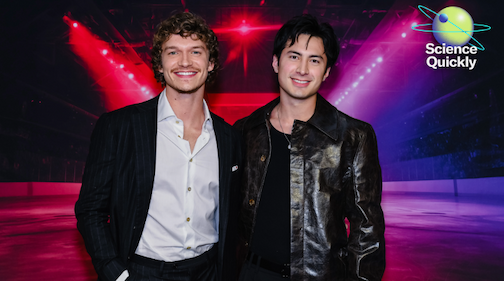
February 11, 2026—The diets of Winter Olympians, what came before the big bang and a CDC-independent review of vaccine science. —Robin Lloyd, Contributing Editor | | Harold Feng/Stringer/Getty Images | | - A Russian dialect coach discusses the linguistics behind how she helped Heated Rivalry star Connor Storrie master challenging Russian sounds and build a believable accent. | 18 min listen
- The U.S. Food and Drug Administration won't consider a new mRNA vaccine for the flu despite the technology's life-saving promise and use in COVID shots. | 2 min read
- The American Medical Association is launching an effort to evaluate vaccine safety and effectiveness independently of U.S. government health agencies. | 2 min read
- Maize farmers in Peru's Chincha Valley were fertilizing their crops with seabird poop as early as the year 1250. | 3 min read
- A variety of hair extensions—from natural to synthetic—may contain chemicals linked to cancer and reproductive issues, a new study finds. | 3 min read
- There's more to Winter Olympians' diets than calories—but for some, there are also lots and lots of calories. | 6 min read
- For discussion: We've seen large language models improve rapidly at tasks many thought would never be possible. Despite the hype, people with subject matter expertise repeatedly find some models lacking. Do you think this type of AI is on track to reach or exceed an expert level in any fields or professions? Post your comments by reading our article on a first-of-its kind math exam for AI, scrolling down to the tan box and clicking "Join the Discussion."
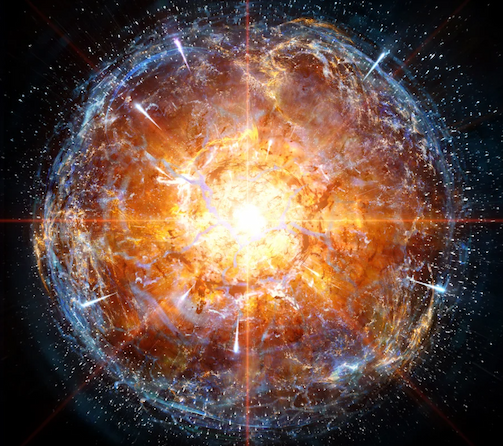
| | All About Space/Getty Images | | The big bang originated our universe, but some cosmologists are tackling theories for what came before the big bang, aka, "before before," writes Scientific American contributor Sarah Scoles. Researchers developing three leading ideas of the ultimate origins of the universe, called "the no-boundary proposal," "a bouncing, cyclic cosmos" and "mirror universe," operate at the blurry intersection of physics and philosophy. These cosmologists accept that this mystery, as well as observations to support their theories, may or may not be forthcoming in their lifetime. But this is how science is developed—by probing the inaccessible.How it works: The no-boundary proposal is an attempt to use math to re-create the universe, as we see it today, from a finite globe, where there's "no north of north," Scoles writes. The bouncing, cyclic cosmos posits that what appears as a big bang giving birth to our universe is actually a "big bounce"—cycling oscillations between a cosmos ballooning, slightly shrinking and then expanding. Finally, the mirror universe idea can be likened to "the points of two ice cream cones touching each other," with their contact representing the big bang, Scoles writes. Time proceeds forward from the center on our side but backward on the other.What the experts say: "I'm happy to listen to any framework, but I only start taking it seriously when it produces a clean observational target that a real instrument can go after. If there isn't a discriminant you can measure, you're doing metaphysics with equations," says Brian Keating, a cosmologist at the University of California, San Diego. | | | | |
Computers can solve myriad problems efficiently, but there's a set of problems—called "NP problems"—that they can't yet. Solving Sudoku puzzles of any size, scheduling a flight tour within a budget, predicting how proteins will fold and encryption schemes are examples of these problems. These types of computational problems can't necessarily be solved quickly but their solutions can be verified efficiently. Fortunately, in 1972 a computer scientist found that an efficient algorithm that could solve any one of 21 special NP problems also could solve the other 20 as well as every NP problem, writes freelance math writer and puzzle creator Jack Murtagh.
How it works: Consider this example of the traveling salesperson problem: if given a budget and a list of cities to go to, could an algorithm figure out if you can go to all the cities and stay within budget? An algorithm could be made for such a task, but as the number of cities on the list grows, the number of routes to check rises exponentially, and the calculation is out of reach for supercomputers to complete. If mathematicians can find an efficient algorithm for such an NP problem, it would mean that all such problems have an efficient solution. "We just don't know it yet," Murtagh writes.
What the experts say: If an efficient algorithm to solve NP problems were found, math problems with practical applications across fields such as biomedical engineering, cartography and more could be solved. Plus, the person who finds an efficient algorithm to solve an NP problem, or who proves that no such algorithm exists, could win a million-dollar prize from the Clay Mathematics Institute. —Emma Gometz, newsletter editor | | - Primordial impact may explain why the moon is asymmetrical | Eos
- These hackers are turning dead vapes into musical synthesizers | Wired
- Botox to nose vibrations: The new treatments offering hope to migraine patients | BBC
| | At the end of recent days, it's a treat to watch the Milan Cortina Winter Olympics recaps available for streaming. Last night, we marveled at the endurance and focus of the men's 20km individual biathlon competitors. In Claire Cameron's story noted above, "What does it take to eat like an Olympian," you'll learn that for high-intensity, long-duration events such as the biathlon, athletes might burn some 7,000 calories, which equates to eating 17 plain bagels from a popular vendor. The story is packed with remarkable dietary details. Our full entertaining and highly informative "Science of the Olympics" coverage can be found here.
| | Thanks for reading. Please send any thoughts, feedback and Olympic science insights to: newsletters@sciam.com. —Robin Lloyd, Contributing Editor | | | | |
Subscribe to this and all of our newsletters here. | | | | |




Comments
Post a Comment