This ends regulation of greenhouse gases from cars and trucks ͏ ͏ ͏ ͏ ͏ ͏ ͏ ͏ ͏ ͏ ͏ ͏ ͏ ͏ ͏ ͏ ͏ ͏ ͏ ͏ ͏ ͏ ͏ ͏ ͏ ͏ ͏ ͏ ͏ ͏ ͏ ͏ ͏ ͏ ͏ ͏ ͏ ͏ ͏ ͏ ͏ ͏ ͏ ͏ ͏ ͏ ͏ ͏ ͏ ͏ ͏ ͏ ͏ ͏ ͏ ͏ ͏ ͏ ͏ ͏ ͏ ͏ ͏ ͏ ͏ ͏ ͏ ͏ ͏ ͏ ͏ ͏ ͏ ͏ ͏ ͏ ͏ ͏ ͏ ͏ ͏ ͏ ͏ ͏ ͏ ͏ ͏ ͏ ͏ ͏ ͏ ͏ ͏ ͏ ͏ ͏ ͏ ͏ ͏ ͏ ͏ ͏ ͏ ͏ ͏ ͏ ͏ ͏ ͏ ͏ ͏ ͏ ͏ ͏ ͏ ͏ ͏ ͏ ͏ ͏ ͏ ͏ ͏ ͏ ͏ ͏ ͏ ͏ ͏ ͏ ͏ ͏ ͏ ͏ ͏ ͏ ͏ ͏ ͏ ͏ ͏ ͏ ͏ ͏ ͏ ͏ ͏ ͏ ͏ ͏
February 12, 2026—AI is helping to fight wildfires. Plus, a brewing ski-suit scandal at the Olympics and the EPA dropped one of its landmark findings. —Andrea Gawrylewski, Chief Newsletter Editor | | A ski jumper on day four of the Milano Cortina 2026 Winter Olympic games. Lars Baron/Getty | | - Some ski jumpers in the ongoing Olympics are allegedly enlarging their crotch area by injecting their genitals with engorging chemicals or stuffing their underwear to create bigger bulges. The apparent reason: to gain a boost in jumps. Here's the physics of how that would work. | 4 min read
- The Environmental Protection Agency scrapped the agency's landmark 2009 global warming "endangerment finding," breaking with the long-standing scientific consensus that global warming poses a risk to human health, and ending emissions regulation of cars and trucks. | 2 min read
- Three species of Red Sea fish appear to rely on special "hybrid" retina cells to see in dim underwater environments. | 2 min read
- BlueBird 6, the largest-ever satellite of its kind, recently launched a commercial communications array antenna in orbit around Earth, spanning some 2,400 square feet. | 2 min read
- Unlike the whiskers of other mammals, those of elephants are more flexible at the tip and stiffer closer to the skin, enabling them to complete delicate tasks with their incredibly strong trunks. | 3 min read
- Join the discussion: Cosmologists think the universe started out with a bang from a small, incredibly hot and dense point. But what caused it? And what happened before that? What do you think may have jumpstarted the universe, and do you think we'll ever answer this question? Share your thoughts by reading the article, scrolling down to the tan box and clicking "Join the Discussion." | 2 min read
| | - One Amsterdam-based company developed an AI program that examines high-resolution satellite imagery based on the locations of a utility company's power network. The program measures tree height, encroachment near power lines, health and mortality of the trees, alongside wildfire-relevant elements like the presence of dead grasses, shrubs and moisture levels. Using this technology, Pacific Gas and Electric (PG&E), saw a nearly 50 percent drop in the number of ignitions with vegetation as a suspected trigger in 2025 compared with the previous year.
- Another company, based in San Francisco, designed its own pan-tilt-zoom cameras, which can scan 360 degrees to look for anomalies like daytime smoke and nighttime heat signatures that are then cross-checked by human fire experts. The company partnered with Arizona Public Service (APS), Arizona's largest utility company, and has shortened fire response times over the past two years by up to 25 minutes in some cases.
Why this matters: In 2025 more than 77,000 wildfires were reported in the U.S.—significantly more than the past decade's average—and burned more than five million acres. Droughts have been recurring as the climate has continued to warm, and wildfires are now almost year-round threats. The new technology promises fewer ignitions, smaller fires, and more efficient deployment of firefighters. | | | | |
BROUGHT TO YOU BY SCIENTIFIC AMERICAN | | Join Scientific American for an insightful conversation on the trends and innovations shaping AI in the year ahead. Editor in Chief David M. Ewalt, technology editor Eric Sullivan, and technology writer Deni Ellis Béchard will share their perspectives on what's next—and who wins and who loses—in the age of AI. | | | | |
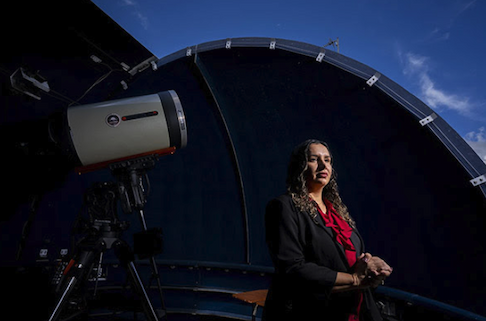
To determine how a board game from the ancient Roman empire was played, a team of scientists employed AI agents as gamers. The stone game board was about eight inches across and etched with angular lines that roughly formed the shape of an oblong octagon inside a rectangle. Its surface showed grooves where players might have dragged their game pieces across. Scientists programmed two AI agents to play the game virtually over and over again using 130 possible game configurations based on other known European games, both ancient and modern. Most of them were variations on an 18th century Scandinavian "blocking game" called haretavl, where three "dog" pieces chase a "hare" piece. As the AI agents played—1,000 games per set of rules—the researchers tracked how the pieces moved and compared the moves with the wear on the board, tracing which gameplay seemed to replicate grooves on the stone. The game that best matched the grooves on the board was indeed a blocking game, with one player using four pieces against the second player's two. I can only imagine how many times this game board was used by ancient Romans, but I bet the AI agents gave them a run for their money. —Emma Gometz, newsletter editor | | A. Enriqueta Valentín Concepción | | Astronomer Desireé Cotto-Figueora is part of NASA's Near-Earth Object Surveyor mission, which aims to spot big near-Earth asteroids to identify potential hazards. "In high school, I started an astronomy club and visited nearby observatories, including the one I work at now," she says. "I don't think that high-school girl would ever have imagined that one day she'd be working on a NASA mission." Nature | 3 min read
Content courtesy of Nature Briefing. | | I hope you've been enjoying our coverage of the science of the Olympics. I'm always struck by the extremes that athletes will go to in order to fulfill their dreams of gold (you don't have to look further than Lindsey Vonn competing with a torn ACL). It reminds me of some legendary scientists who have also risked everything to achieve results: Husband and wife volcanologists Katia and Maurice Krafft who gathered data and got closer to volcanoes than anyone had (and were ultimately killed by lava); marine biologist Sylvia Earle, who set a world record in 1979 by walking untethered on the ocean floor to study deep-sea ecology at a depth of 1,250 feet, which required extensive training; and Nobel winner physician Barry Marshall who drank a flask of Helicobacter pylori bacteria to prove it caused stomach ulcers. Science, like athletics, often advances through courageous physical acts. | | —Andrea Gawrylewski, Chief Newsletter Editor
| | | | |
Subscribe to this and all of our newsletters here. | | | | |






Comments
Post a Comment