Implementing Innovation
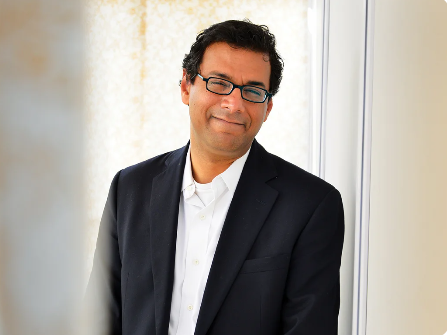
Atul Gawande is a surgeon, author and public health expert. He holds a chair and professorship in surgery at Brigham and Women’s Hospital and at Harvard Medical School, respectively. He previously served as assistant administrator for global health at the U.S. Agency for International Development (USAID) and has written four books. We sat down with Gawande to discuss the state of American science. An abbreviated version of that conversation is below.
Scientific American: How would you describe the current state of American science?
Atul Gawande: Oh, it’s tough. We start out with an amazing base that’s been built up over decades. It’s the talent, it’s the resources, it’s the openness to the world and our brand. We’re recognized as the place to go if you want to do cutting-edge science, make discoveries and make a difference.
But the past year has been gutting. It’s not just the cuts, it’s the weakening of core institutions such as the National Institutes of Health and the National Science Foundation and then the places that deploy discoveries, such as the Centers for Disease Control and Prevention and USAID.
SA: What gives you optimism right now?
AG: The reality is that the demand for people who will bring hard-nosed careful science and the spirit of curiosity, inquiry and problem-solving is there. It’s present in our technology sector in many ways, where the U.S. is driving leadership in the world.
SA: How has your field changed in the past few years?
AG: My fields are public health, surgery and health-care delivery in the U.S. And what I’d say is, over the past few years, these are spaces where we did not normally think of bringing molecular science and population health science and implementing innovation. But we’re getting dramatic results when we do.
Understanding how to create better systems and ways for teams to collaborate can have extraordinary results. We’ve cut the death rate for surgery by more than a third with some simple changes, including a checklist that has people working together more effectively. And this is happening across many other sectors as we think about how we bring the complexity of an enormous amount of capability into primary care, into childbirth, and beyond.
Read the full interview here.




Comments
Post a Comment