The weather pattern will bring extreme weather events and high temps ͏ ͏ ͏ ͏ ͏ ͏ ͏ ͏ ͏ ͏ ͏ ͏ ͏ ͏ ͏ ͏ ͏ ͏ ͏ ͏ ͏ ͏ ͏ ͏ ͏ ͏ ͏ ͏ ͏ ͏ ͏ ͏ ͏ ͏ ͏ ͏ ͏ ͏ ͏ ͏ ͏ ͏ ͏ ͏ ͏ ͏ ͏ ͏ ͏ ͏ ͏ ͏ ͏ ͏ ͏ ͏ ͏ ͏ ͏ ͏ ͏ ͏ ͏ ͏ ͏ ͏ ͏ ͏ ͏ ͏ ͏ ͏ ͏ ͏ ͏ ͏ ͏ ͏ ͏ ͏ ͏ ͏ ͏ ͏ ͏ ͏ ͏ ͏ ͏ ͏ ͏ ͏ ͏ ͏ ͏ ͏ ͏ ͏ ͏ ͏ ͏ ͏ ͏ ͏ ͏ ͏ ͏ ͏ ͏ ͏ ͏ ͏ ͏ ͏ ͏ ͏ ͏ ͏ ͏ ͏ ͏ ͏ ͏ ͏ ͏ ͏ ͏ ͏ ͏ ͏ ͏ ͏ ͏ ͏ ͏ ͏ ͏ ͏ ͏ ͏ ͏ ͏ ͏ ͏ ͏ ͏ ͏ ͏ ͏ ͏
July 10, 2026—How to clean pesticides off produce, China launches an orbital rocket and a deadly super El Niño this year is much more likely.
—Andrea Gawrylewski
Chief Newsletter Editor
|
|
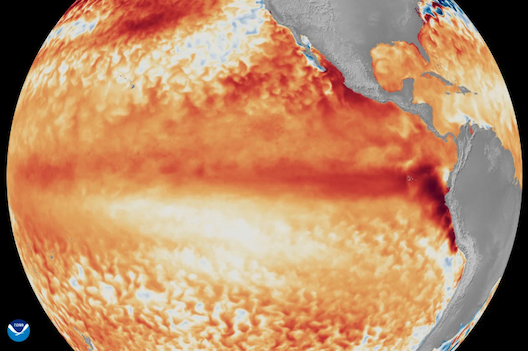
Satellite imagery shows the difference from average sea surface temperatures at the equator in the tropical Pacific Ocean (depicted using various shades of red and orange for warmth) during the first week of June 2026, as compared with the baseline used by the National Oceanic and Atmospheric Administration’s Coral Reef Watch. NOAA Satellites
|
|
The ongoing El Niño has become more powerful over the past month and will likely continue to strengthen well into 2027, according to updated data from the National Weather Service. A "Super El Niño" could mean an increased risk of extreme weather events and record-setting hot temps. | 3 min read
Is Earth the only planet with total solar eclipses? Astronomer Phil Plait has the answer (cool eclipse GIF at this link too). | 5 min read
A proposed rule from the Nuclear Regulatory Commission would ease the standard for low-dose radiation exposure and potentially expose more Americans to higher doses of radiation from nuclear facilities. | 5 min read
Efforts to bring the Tasmanian tiger and woolly mammoth back from extinction are forcing conservationists to face a long-overdue debate over what kind of natural world we want to build. | 7 min read
Astronomers have the first telescopic observation of the tail of a so-called dark comet. | 5 min read
An ancient human ancestor called Homo floresiensis was likely a scavenger who subsisted on the scraps left behind by the fearsome Komodo dragons that shared their home on the island of Flores in Indonesia. | 3 min read
This morning China successfully launched and recovered the first stage of its Long March 10B orbital rocket on that vehicle’s maiden flight. | 5 min read
Two weeks ago, the journal Nature published a peer-reviewed paper that purported to upend our understanding of the universe. But some physicists have immediately responded that the paper is flawed. | 4 min
|
|
Wash Your Veg
Eating your fruits and vegetables is one of the best (and most enjoyable!) health hacks. But pesticides, some of which can be harmful to your health in high quantities, can end up on your produce, even if you choose organic. The Environmental Working Group (EWG) recently released a list of the fruits and vegetables with the most pesticide residue this year—and some of them contain pesticides with PFAS “forever chemicals.”
What you can do: First off, always wash your fruits and vegetables. The FDA recommends running your produce under water for 20 seconds and scrubbing it with a produce brush if it has a hard surface like a melon or cucumber. Food scientists have also been looking into the efficacy of common household items like baking soda and vinegar to break down pesticides on produce. They found that adding a teaspoon of baking soda or vinegar to water and soaking your produce in it for 10 minutes can reduce the presence of certain harmful residues. (Don’t add both baking soda and vinegar—they cancel each other out by making the pH of the water neutral.)
What the experts say: Just because pesticide residue is a problem doesn’t mean we shouldn’t eat a diet rich in produce. “The benefits of eating fruits and vegetables definitely outweigh the risk of pesticide exposure,” says Dayna de Montagnac, an associate scientist at EWG. “But we should be able to enjoy the benefits of having nutritious fruits and vegetables that are free of pesticide residues.” —Emma Gometz, Newsletter Editor
|
|
|
|
|
|
TRAVEL WITH SCIENTIFIC AMERICAN
|
|
Limited Space on Trip of a Lifetime
|
|
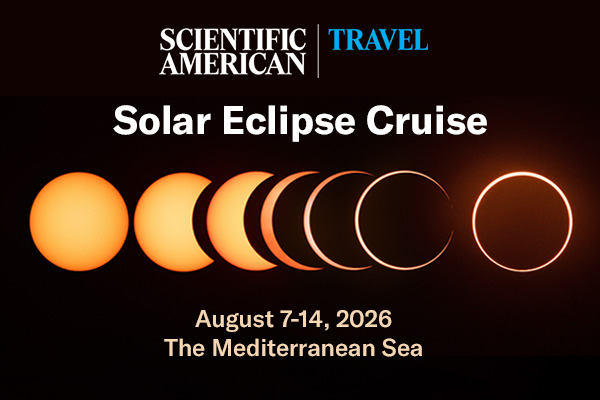
Only a few cabins left for our 2026 solar eclipse cruise! Reserve yours while you can for an extraordinary experience: watching totality approach while surrounded by the sea, fellow science lovers and your trip leader, Chief of Reporters Clara Moskowitz.
|
|
|
|
|
|
YOUNG AMERICAN SCIENTISTS
|
|
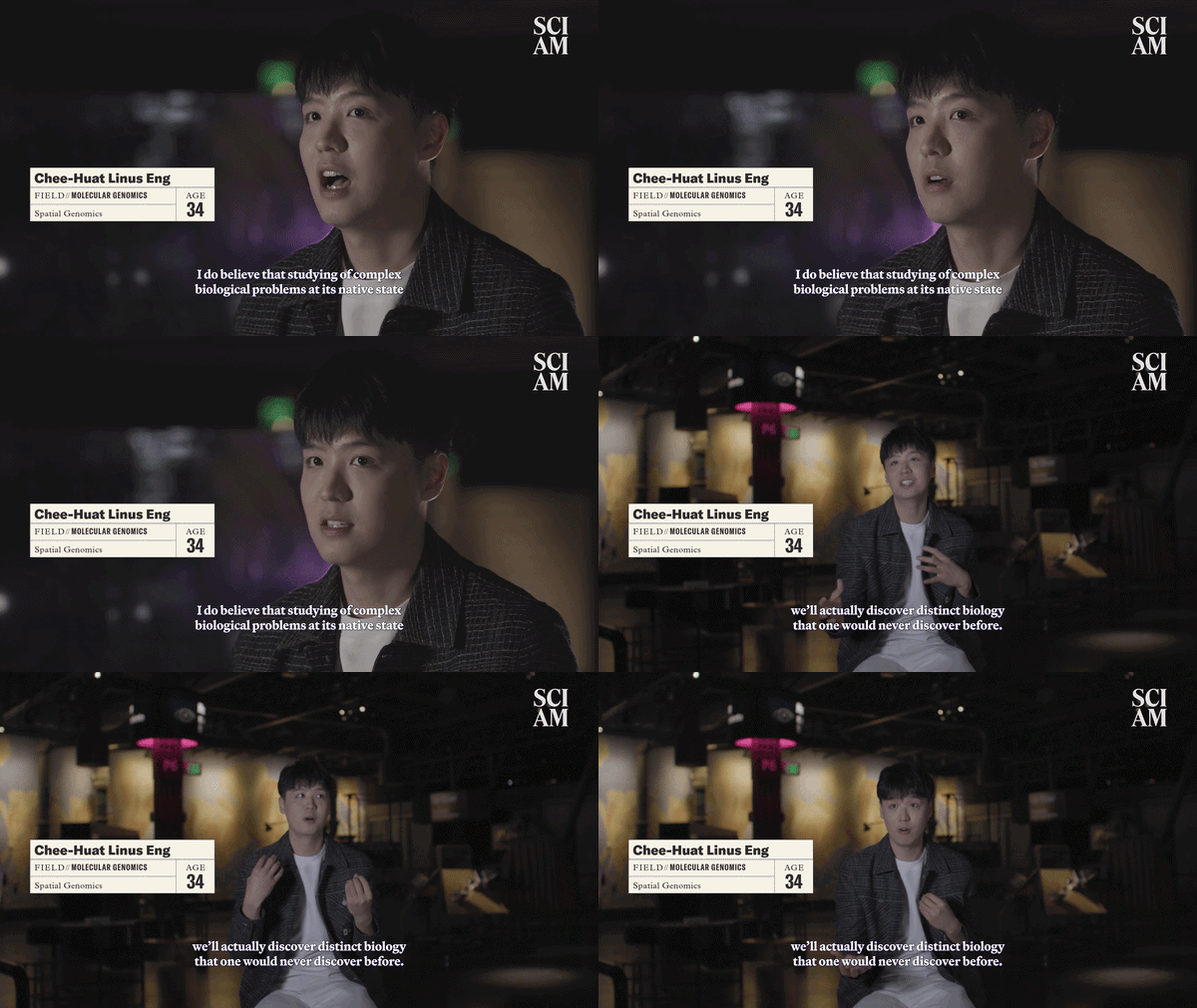
As vice president of research and development at the biotech company Spatial Genomics, molecular genomist Chee-Huat Linus Eng focuses on a deceptively simple task: capturing a cell’s genetic activity at a specific point in time. That activity is recorded in RNA transcripts, which are copies of the information encoded by a particular gene sequence. Together the different types of RNA transcripts make up a cell’s transcriptome. Scientists could already capture this transcriptome for a single cell isolated from the tissue around it, but Eng and his Caltech colleagues devised a technique to capture the information while the cell remained in situ. The method should enable scientists to see what cells are doing in ways that are useful in many diverse areas, including developmental biology, neuroscience, cancer research, immunology and microbiology.
|
|
|
MOST POPULAR STORIES OF THE WEEK
|
|
-
Why are the steel beams inside a Manhattan skyscraper buckling? | 4 min read
-
The biological dogma that women don’t make new eggs after birth may be wrong | 5 min read
-
|
|
Every Friday in summer we're recommending a great, freshly-published science read. Tell us what you're reading, or if you try any of our recommendations!
|
|
This Vast Enterprise: A New History of Lewis & Clark
By Craig Fehrman. Simon & Schuster, April 21, 2026.
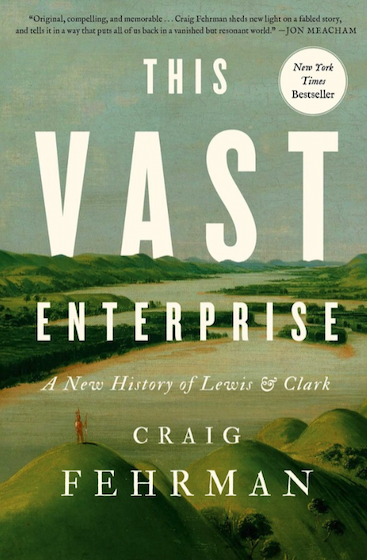 In This Vast Enterprise, historian Craig Fehrman expands the perfunctory historical tale of the famed expedition of Meriwether Lewis and William Clark to include the soldiers, schemers and native inhabitants of the lands and waters charted by the expedition. Each chapter takes the viewpoint of a character relegated to be merely a side player in past accounts, bringing together old and new scholarship to tell their tales. Perhaps most poignant and sad is the story of York, the enslaved man born on Clark's family plantation. Under the surprising democracy that governed the expedition he was armed and given a vote, only to be bound in slavery on his return. The shifting viewpoint broadens the story of the expedition and the territory they traversed. The characters of Lewis and Clark both fade a bit amid these retellings, perhaps rightly, revealing a richer, and truer, version of the American West. —Dan Vergano In This Vast Enterprise, historian Craig Fehrman expands the perfunctory historical tale of the famed expedition of Meriwether Lewis and William Clark to include the soldiers, schemers and native inhabitants of the lands and waters charted by the expedition. Each chapter takes the viewpoint of a character relegated to be merely a side player in past accounts, bringing together old and new scholarship to tell their tales. Perhaps most poignant and sad is the story of York, the enslaved man born on Clark's family plantation. Under the surprising democracy that governed the expedition he was armed and given a vote, only to be bound in slavery on his return. The shifting viewpoint broadens the story of the expedition and the territory they traversed. The characters of Lewis and Clark both fade a bit amid these retellings, perhaps rightly, revealing a richer, and truer, version of the American West. —Dan Vergano
|
|
|
|
By total coincidence I recently read the (until now) definitive telling of the Lewis and Clark expedition by Stephen Ambrose, Undaunted Courage. It is a good book. But I couldn't help feeling like certain characters in the story were getting short shrift. For instance, Sacagawea was a woman from the Shoshone tribe, born near the modern-day Idaho-Montana border. She traveled with the Lewis and Clark expedition thousands of miles from North Dakota to the Pacific Ocean, and she was crucial in helping to establish communication with Native American people they encountered. And yet I felt her story, in Ambrose's telling, was a little sidelined. History is very rarely made by one or two people on their own, and sometimes the supporting characters deserve broader acknowledgement.
—Andrea Gawrylewski, Chief Newsletter Editor
|
|
|
|
|
Subscribe to this and all of our newsletters here.
|
|
|
|
|




Comments
Post a Comment