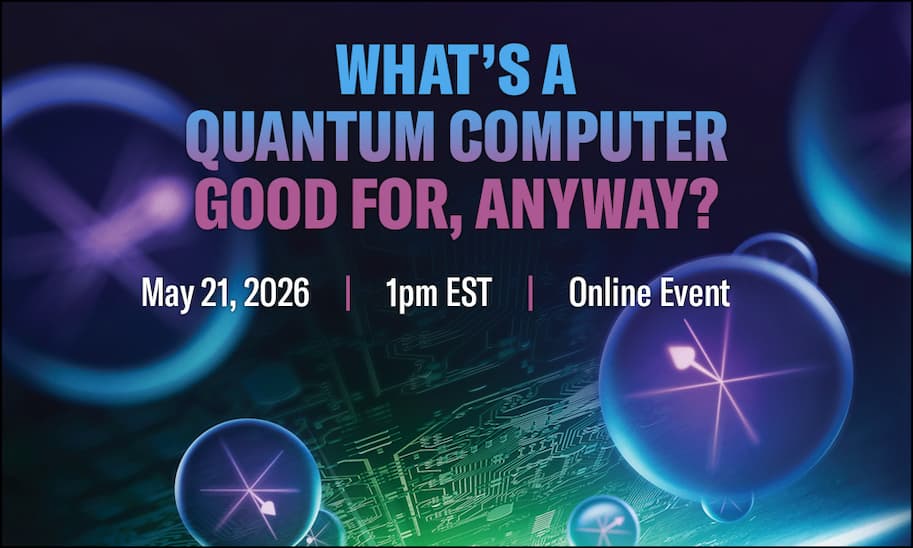
What's a quantum computer good for, anyway? Register today to find out! ͏ ͏ ͏ ͏ ͏ ͏ ͏ ͏ ͏ ͏ ͏ ͏ ͏ ͏ ͏ ͏ ͏ ͏ ͏ ͏ ͏ ͏ ͏ ͏ ͏ ͏ ͏ ͏ ͏ ͏ ͏ ͏ ͏ ͏ ͏ ͏ ͏ ͏ ͏ ͏ ͏ ͏ ͏ ͏ ͏ ͏ ͏ ͏ ͏ ͏ ͏ ͏ ͏ ͏ ͏ ͏ ͏ ͏ ͏ ͏ ͏ ͏ ͏ ͏ ͏ ͏ ͏ ͏ ͏ ͏ ͏ ͏ ͏ ͏ ͏ ͏ ͏ ͏ ͏ ͏ ͏ ͏ ͏ ͏ ͏ ͏ ͏ ͏ ͏ ͏ ͏ ͏ ͏ ͏ ͏ ͏ ͏ ͏ ͏ ͏ ͏ ͏ ͏ ͏ ͏ ͏ ͏ ͏ ͏ ͏ ͏ ͏ ͏ ͏ ͏ ͏ ͏ ͏ ͏ ͏ ͏ ͏ ͏ ͏ ͏ ͏ ͏ ͏ ͏ ͏ ͏ ͏ ͏ ͏ ͏ ͏ ͏ ͏ ͏ ͏ ͏ ͏ ͏ ͏ ͏ ͏ ͏ ͏ ͏ ͏
May 21, 2026 | 1PM EST | Online
|
|
In principle, quantum computers offer enormous performance boosts for certain applications in cryptography, telecommunications, materials science, and fundamental physics. In practice, such breakthroughs remain as yet unrealized.
|
|
Reserved for subscribers!
|
|
|
|
|
Senior Desk Editor, Physical Science, Scientific American
|
|
|
|
|
Chief of Reporters, Scientific American
|
|
|
|
|
Senior Desk Editor, Technology, Scientific American
|
|
|
|
|
You received this email because you opted-in to receive email from Scientific American or you have registered for an account with Scientific American.
To ensure delivery please add news@scientificamerican.com to your address book.
|
|
|
|
|








Comments
Post a Comment