Physicists say the story clashes with the basic limits of magnetic sensing ͏ ͏ ͏ ͏ ͏ ͏ ͏ ͏ ͏ ͏ ͏ ͏ ͏ ͏ ͏ ͏ ͏ ͏ ͏ ͏ ͏ ͏ ͏ ͏ ͏ ͏ ͏ ͏ ͏ ͏ ͏ ͏ ͏ ͏ ͏ ͏ ͏ ͏ ͏ ͏ ͏ ͏ ͏ ͏ ͏ ͏ ͏ ͏ ͏ ͏ ͏ ͏ ͏ ͏ ͏ ͏ ͏ ͏ ͏ ͏ ͏ ͏ ͏ ͏ ͏ ͏ ͏ ͏ ͏ ͏ ͏ ͏ ͏ ͏ ͏ ͏ ͏ ͏ ͏ ͏ ͏ ͏ ͏ ͏ ͏ ͏ ͏ ͏ ͏ ͏ ͏ ͏ ͏ ͏ ͏ ͏ ͏ ͏ ͏ ͏ ͏ ͏ ͏ ͏ ͏ ͏ ͏ ͏ ͏ ͏ ͏ ͏ ͏ ͏ ͏ ͏ ͏ ͏ ͏ ͏ ͏ ͏ ͏ ͏ ͏ ͏ ͏ ͏ ͏ ͏ ͏ ͏ ͏ ͏ ͏ ͏ ͏ ͏ ͏ ͏ ͏ ͏ ͏ ͏ ͏ ͏ ͏ ͏ ͏ ͏
April 9, 2026—NASA's Artemis II mission is getting ready to return to Earth tomorrow. Plus, does the "Ghost Murmur" CIA tool really exist? And my colleague Emma Gometz gets uncomfortable over a scientific tickle experiment.
—Andrea Gawrylewski
Chief Newsletter Editor
|
|
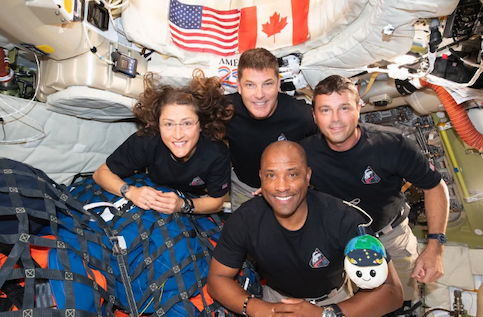
From left to right: Mission specialist Christina Koch, mission specialist Jeremy Hansen, pilot Victor Glover and commander Reid Wiseman, NASA’s Artemis II crew, pose for a group photograph. NASA
|
|
- Today is the Artemis II mission's last full day in space. Yesterday the crew carried out low-stakes activities (selfies, workouts, testing compression suits). Today they are focused on configuring the Orion capsule for their return and carefully studying their planned reentry procedures. Read a full recap here. | 2 min read
- It’s NASA tradition to wake up astronauts with a song. The songs were selected by “the moon crew,” and yesterday they gave some insight into their selections. | 2 min read
- Reentry into Earth's atmosphere may be the most challenging stretch of the mission yet. Some experts have raised concern over the craft's heat shield, which must withstand temperatures as high as 5,000 degrees Fahrenheit. | 3 min read
- China is working toward its own moon landing. Could it put astronauts on the moon before NASA’s Artemis program does? | 4 min read
|
|
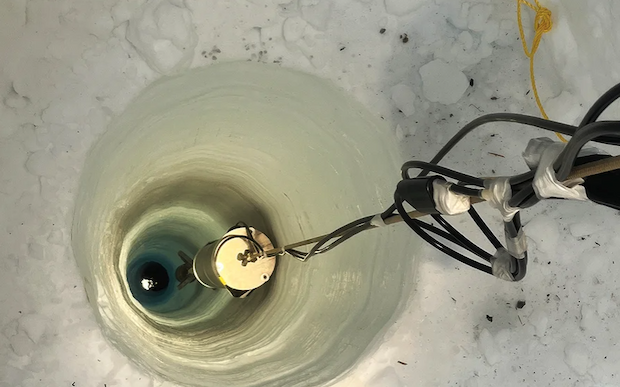
Researchers drilled 8,000 feet into South Pole ice to install two seismometers. Robert Anthony/USGS
|
|
|
|
|
It brings me no pleasure to share this: There is a lab in Sweden where participants (why they voluntarily do this I do not know) sit in a dentist’s chair to be tickled by a robot named Hektor. Scientists set up this experiment slash medieval torture device to observe human brain activity during tickling, as well as the body’s outward response to it, like facial expressions and breathing. I hear some people find this news delightful, and even like being tickled. Turns out, humans’ different responses to tickling can say a lot about us.
Why this matters: Neuroscientists are trying to figure out if tickling has a biological function. Touch is an incredibly important social signal for our species, and one theory is that tickling helps us feel closer to one another. Another theory is that our ancestors used tickling to playfully teach their young what spots on the body are vulnerable in an attack. But people with certain neurodevelopmental or psychological conditions may experience it differently—a 2024 study found that individuals with higher scores on autism tests did not respond as positively to tickling as their lower-scoring peers. In terms of how that relates to me, no comment.
What the experts say: “Tickling presents neuroscientists with an opportunity to study how complex systems of the brain and body, including those involved in emotion, movement and sensation, relate,” writes Konstantina Kilteni, the principal investigator at the Touch & Tickle Lab based in Karolinska, the Netherlands. —Emma Gometz, newsletter editor
|
|
|
WEIRD METHODS: ORGAN-ON-A-CHIP
|
|
Scientists use creative—and sometimes downright bizarre—tactics to conduct their research. We highlight some here.
Space travel seems to do weird things to the human body. But if astronauts ever want to get as far out as Mars, scientists need to understand much more about the bodily effects of microgravity and radiation during long flights.
On the ongoing Artemis II mission, the four astronauts are carrying chips the size of USB sticks containing cultivated cells from their own donated bone marrow tissue. These “organ-on-a-chip" devices can replicate a living organ’s key functions without risk to the owner. There are also identical bone marrow chips waiting back on Earth, and after the mission, scientists will perform single cell RNA-sequencing on both sets of chips to compare how bone marrow tissue genes change in space versus on Earth. Studying bone marrow will help scientists better understand how space travel affects the immune system, and potentially lead to personalized medicine kits for space travel. A few cells may bring us closer to making the trip to Mars real! —EG
|
|
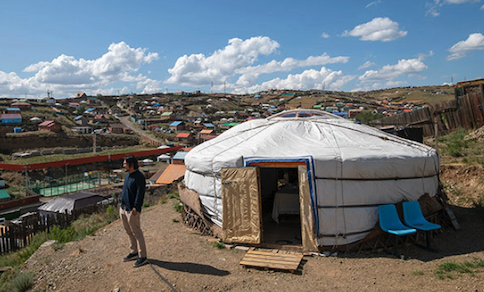
Ulaanbaatar, Mongolia’s capital, is among the world’s most toxic cities—with coal burnt in the furnaces of traditional ger (also known as yurt) housing responsible for most of the smog. Unurbat Erdenemunkh, a former experimental physicist, pivoted from a career abroad to focus on developing climate solutions for his home region. His flagship project is Coal-to-Solar, a pilot program that works with ger-dwelling families to swap their furnaces for solar panels, assisted by heat-storage bricks, batteries and insulation. Nature | 3 min read
|
|
A few months ago, we added a new module to this newsletter called "Weird Methods" that highlights particularly strange experimental set-ups scientists are using to study the world around them. Today's newsletter is particularly full of some very interesting and unusual science—organs on a chip, tickle labs, alleged quantum heartbeat detectors, chimp civil wars! Forward this email to anyone who has ever told you science is boring.
Thank you for being a part of this science-loving community. Send any thoughts, questions, or observations about the world around YOU to newsletters@sciam.com. See you tomorrow for Artemis II splashdown day.
|
|
—Andrea Gawrylewski, Chief Newsletter Editor
|
|
|
|
|
Subscribe to this and all of our newsletters here.
|
|
|
|
|




Comments
Post a Comment