Plus, how to build a moon base ͏ ͏ ͏ ͏ ͏ ͏ ͏ ͏ ͏ ͏ ͏ ͏ ͏ ͏ ͏ ͏ ͏ ͏ ͏ ͏ ͏ ͏ ͏ ͏ ͏ ͏ ͏ ͏ ͏ ͏ ͏ ͏ ͏ ͏ ͏ ͏ ͏ ͏ ͏ ͏ ͏ ͏ ͏ ͏ ͏ ͏ ͏ ͏ ͏ ͏ ͏ ͏ ͏ ͏ ͏ ͏ ͏ ͏ ͏ ͏ ͏ ͏ ͏ ͏ ͏ ͏ ͏ ͏ ͏ ͏ ͏ ͏ ͏ ͏ ͏ ͏ ͏ ͏ ͏ ͏ ͏ ͏ ͏ ͏ ͏ ͏ ͏ ͏ ͏ ͏ ͏ ͏ ͏ ͏ ͏ ͏ ͏ ͏ ͏ ͏ ͏ ͏ ͏ ͏ ͏ ͏ ͏ ͏ ͏ ͏ ͏ ͏ ͏ ͏ ͏ ͏ ͏ ͏ ͏ ͏ ͏ ͏ ͏ ͏ ͏ ͏ ͏ ͏ ͏ ͏ ͏ ͏ ͏ ͏ ͏ ͏ ͏ ͏ ͏ ͏ ͏ ͏ ͏ ͏ ͏ ͏ ͏ ͏ ͏ ͏
March 12, 2026—An alcoholic exocomet, how to build a moon base and the premise and impacts of the Iran war. —Robin Lloyd, Contributing Editor | | Tehran on March 02, 2026. Contributor/Getty Images | | Explore the universe with a subscription to Scientific American. Check out our great March deal! | | | | |
An artist's impression of Comet 3I/ATLAS is shown as it passes near the sun. NSF/AUI/NSF NRAO/M.Weiss | | A rare interstellar comet that raced past our sun last year, reaching speeds of more than 150,000 miles per hour, is "heavily enriched" in methanol, well beyond the amount astronomers expected. Typical comets approaching the sun leave a trail of carbon monoxide, methane and ammonia gas. The new finding on Comet 3I/ATLAS could help researchers figure out where the comet originated, reports Scientific American's Jackie Flynn Mogensen. | | How it works: Comet 3I/ATLAS is one of just three interstellar objects ever to have been discovered. It is offering scientists a rare opportunity to observe a scrap of another star system. A European Space Agency probe photographed Comet 3I/ATLAS in November, seven days after its closest approach to the sun, revealing the object as a "white, glowing egg-shaped object."
What the experts say: "Observing 3I/ATLAS is like taking a fingerprint from another solar system. The details reveal what it's made of, and it's bursting with methanol in a way we just don't usually see in comets in our own solar system," said Nathan Roth, of American University, in a statement.
| | The U.S. and China both have goals of establishing a sustainable, permanent, crewed moon base in a handful of years, but they are going about it differently, write space industry reporter Leonard David and Scientific American's Lee Billings. China's two-phased approach, in partnership with Russia's space agency, will hew toward an Apollo-style, "safety first" plan. By contrast, the U.S. is partnering with several nations and commercial partners that could build at more perilous sites near the lunar south pole. A law advanced by a Senate committee calls for NASA to establish a permanent moon base before China does.
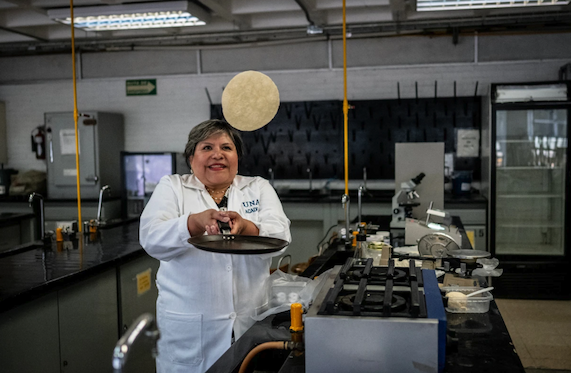
How it works: China's plan is set to start with a mission later this year to survey a south pole crater for water ice and other resources, followed one or two years later by a mission to try out key base-building operations. Humans would occupy the base in the second phase. Meanwhile, a U.S. effort will resemble a "futuristic junkyard with lots of landers and rovers around" for several years after it starts up, before it will eventually gain more "pretty cool infrastructure," NASA administrator Jared Isaacman has reportedly stated. What the experts say: "It will be a governance test. The real question is whether multiple nations can operate side-by-side at the most valuable places on the moon without turning operational safety into geopolitical exclusion," said Michelle Hanlon, executive director of the Center for Air and Space Law at the University of Mississippi. | | Credit: Carl de Souza/AFP/Getty | | Food scientist Raquel Gómez-Pliego hopes to make the iconic tortilla even better. "The ingredients for the tortilla I was frying in this photo have been fermented to include probiotics and prebiotics for gut health," she says. "Improving a staple food that people already eat daily is a powerful public-health strategy." Nature | 3 min read
Content courtesy of Nature Briefing. | | The unusual journey of Comet 3I/ATLAS as it passes through our solar system has been documented thoroughly by Scientific American. In November, Phil Plait listed the two known exocomets that preceded 3I/ATLAS. They were 1I/'Oumuamua, discovered in 2017, and 2I/Borisov, spotted in 2019. "Statistically speaking, there's probably more than one such alien comet in our solar system at any given time; they're mostly just too small and faint to detect," Plait wrote. By now, Comet 3I/ATLAS is on its way back out of the solar system, according to EarthSky. But our next interstellar visitor might not be far off, at the recent rate of discovery.
| | —Robin Lloyd, Contributing Editor
| | | | |
Subscribe to this and all of our newsletters here. | | | | |




Comments
Post a Comment