Powering a lunar settlement requires nuclear power, experts say ͏ ͏ ͏ ͏ ͏ ͏ ͏ ͏ ͏ ͏ ͏ ͏ ͏ ͏ ͏ ͏ ͏ ͏ ͏ ͏ ͏ ͏ ͏ ͏ ͏ ͏ ͏ ͏ ͏ ͏ ͏ ͏ ͏ ͏ ͏ ͏ ͏ ͏ ͏ ͏ ͏ ͏ ͏ ͏ ͏ ͏ ͏ ͏ ͏ ͏ ͏ ͏ ͏ ͏ ͏ ͏ ͏ ͏ ͏ ͏ ͏ ͏ ͏ ͏ ͏ ͏ ͏ ͏ ͏ ͏ ͏ ͏ ͏ ͏ ͏ ͏ ͏ ͏ ͏ ͏ ͏ ͏ ͏ ͏ ͏ ͏ ͏ ͏ ͏ ͏ ͏ ͏ ͏ ͏ ͏ ͏ ͏ ͏ ͏ ͏ ͏ ͏ ͏ ͏ ͏ ͏ ͏ ͏ ͏ ͏ ͏ ͏ ͏ ͏ ͏ ͏ ͏ ͏ ͏ ͏ ͏ ͏ ͏ ͏ ͏ ͏ ͏ ͏ ͏ ͏ ͏ ͏ ͏ ͏ ͏ ͏ ͏ ͏ ͏ ͏ ͏ ͏ ͏ ͏ ͏ ͏ ͏ ͏ ͏ ͏
June 1, 2026—Today, the details of NASA's plan to put a nuclear reactor on the moon. Also, a billion-entry database of possible proteins and we launch our summer reading challenge.
—Andrea Gawrylewski
Chief Newsletter Editor
|
|
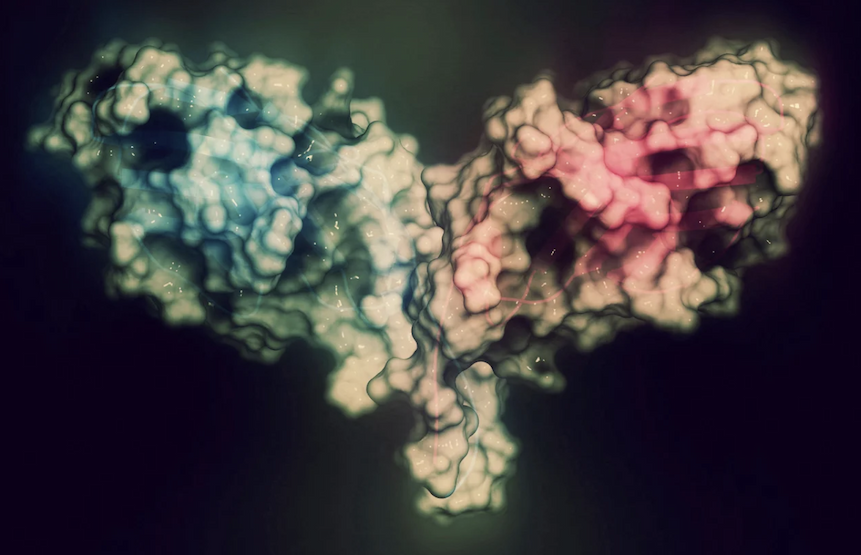
An AI tool designed binders against Cytotoxic T-lymphocyte-associated protein 4 (CTLA-4). Science Photo Library/Alamy
|
|
- A newly released artificial-intelligence tool called ESM Atlas has generated a database of more than one billion predicted protein structures and billions more protein sequences. | 3 min read
- Why do hurricanes come in seasons? We explain. | 3 min
- The National Science Foundation— a major funder of basic research—has restricted the flow of new research grants to a group of elite universities, according to Nature news. | 5 min read
- Today China launched its latest rocket, Long March 12B, for the first time with reportedly no advance warning. Airspace and maritime warnings are standard global safety procedures preceding rocket launches. | 2 min read
- This week the firm Micron Technology became the first U.S. memory-chip company to briefly top $1 trillion in market value—a milestone that points to a larger shift in the AI supply chain. | 3 min read
- Prices for nitrogen fertilizer around the globe have jumped since the start of the war in Iran, sending agriculture officials around the world scrambling to offset costs and shore up supplies before the shortage hits food crops. | 5 min read
- Scientific American sat down with Andrew Scott, the actor who played World War II meteorologist James Stagg in the new film Pressure. The movie explores the crucial role weather forecasting played in D-Day. | 9 min video
|
|
This newsletter is made possible by subscribers to Scientific American. Join today to support independent science journalism and get full access to every story: 90 days for just $1.
|
|
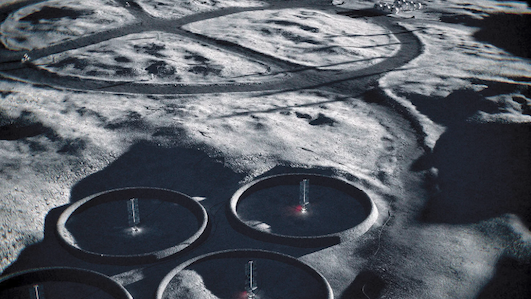
Lockheed Martin illustration shows a potential future nuclear-powered Artemis moon base. Lockheed Martin
|
|
A Nuclear Reactor on the Moon |
NASA’s Artemis program has an ultimate goal: To establish a permanent habitat on the moon by 2036. Following the stunning journey of the Artemis II Orion spacecraft around the moon in April, the next Artemis missions will test lunar landers in 2027 ( Artemis III), land a crewed mission on the moon in early 2028 ( Artemis IV), and, finally, in late 2028, land a follow-up crew on the moon to establish a more permanent settlement on the lunar south pole ( Artemis V). This lunar site will become a scientific outpost, a mining site and a rocket launchpad pointed at Mars. But solar power alone will not be enough to fuel such a facility. Nuclear power is really the only option. In January, NASA’s current administrator, Jared Isaacman, reaffirmed the plan to put nuclear fission power on the moon.
Why nuclear: A moon base wouldn’t just need power for supporting human life. Because our cosmic companion has relatively no atmosphere, the temperature fluctuates wildly—regularly swinging from 250 degrees Fahrenheit during the day to -208 degrees F at night. A moon base would need a constant source of heat in the night and a way to vent that heat when temps soar during lunar daytime. Plus, if the base is to use machinery to extract precious water from the lunar soil—water for hydrating both astronauts and crops and, crucially, to be electrically split into hydrogen and oxygen gas to make rocket fuel—then they’ll need a lot of electricity to do it. The prototype lunar nuclear reactor is designed to be about the size of a large car and would generate enough to power an office building.
The challenges:
- Hardware: Any reactor would have to survive extreme temperature swings, abrasive lunar dust, micrometeorite impacts, moonquakes, and long-term exposure to radiation—all in an environment where no one has ever operated a nuclear reactor before. NASA would also need landing systems, shielding, power distribution networks, and facilities capable of integrating the reactor into a permanent lunar base.
- The fuel: Nuclear fuel would need to be launched to the moon aboard rockets, creating concerns about accidents during launch or transit.
- Cooling: On the moon, engineers must design entirely different cooling systems for a nuclear reactor that can efficiently radiate heat into space while operating in vacuum conditions.
- Maintenance: The lunar base will likely only house a handful of astronauts who can run maintenance on a power reactor with limited spare parts, so the system would need to be highly reliable and self-sustaining.
- Timeline: Designing, testing, certifying, launching, and deploying a completely new class of lunar reactor by 2030 is an extremely aggressive schedule, according to some.
What the experts say: Nuclear power “is the only way we can sustain a lunar base properly long-term,” says Simon Middleburgh, co-director of the Nuclear Futures Institute at Bangor University in Wales. And the U.S. isn’t the only nation with this ambition. China and Russia are teaming up to put their own reactor on the moon by 2035. “Sooner or later, from one nation or another, “nuclear power on the moon will happen,” Middleburgh says. “It’s inevitable.”
|
|
|
|
|
 |
We're launching the first-ever Scientific American Summer Reading Challenge, which begins today and ends on August 31. We challenge you to read along with the staff and check off boxes on a bingo card. We’ll be offering exclusive prizes to select winners. Read more about the challenge and download the bingo card here. Plus, all summer in Today in Science we'll be recommending science-y reads to inspire your book list!
|
|
|
- The Trump administration seems determined to shrink funding for the social, behavioral, and economic sciences. | The Atlantic
- A single asteroid impact may have deposited all of the water on the planet Mercury. | Gizmodo
- Scientists are inherently optimists. But now many of them are losing heart. | STAT
|
|
Welcome to a new week of scientific discovery! If you're a longtime reader of Today in Science, you'll know that I am a big book buff (and so are many of my colleagues). We read all year long to assemble our year-end best books lists, focusing on the books we think science-curious people would love. And summer is a great chance to explore some new titles. I hope you participate in our summer reading challenge and keep an eye out for recommended books from our editors, which I'll be including in Today in Science every Friday in summer. Let me know what books you've loved this year and what's still on your list. Read on!
|
|
Send any other thoughts, ideas or feedback on this newsletter to newsletters@sciam.com. See you tomorrow!
—Andrea Gawrylewski, Chief Newsletter Editor
|
|
|
|
|
Subscribe to this and all of our newsletters here.
|
|
|
|
|





Comments
Post a Comment