An investigation was launched into the death of a Starbase worker last week ͏ ͏ ͏ ͏ ͏ ͏ ͏ ͏ ͏ ͏ ͏ ͏ ͏ ͏ ͏ ͏ ͏ ͏ ͏ ͏ ͏ ͏ ͏ ͏ ͏ ͏ ͏ ͏ ͏ ͏ ͏ ͏ ͏ ͏ ͏ ͏ ͏ ͏ ͏ ͏ ͏ ͏ ͏ ͏ ͏ ͏ ͏ ͏ ͏ ͏ ͏ ͏ ͏ ͏ ͏ ͏ ͏ ͏ ͏ ͏ ͏ ͏ ͏ ͏ ͏ ͏ ͏ ͏ ͏ ͏ ͏ ͏ ͏ ͏ ͏ ͏ ͏ ͏ ͏ ͏ ͏ ͏ ͏ ͏ ͏ ͏ ͏ ͏ ͏ ͏ ͏ ͏ ͏ ͏ ͏ ͏ ͏ ͏ ͏ ͏ ͏ ͏ ͏ ͏ ͏ ͏ ͏ ͏ ͏ ͏ ͏ ͏ ͏ ͏ ͏ ͏ ͏ ͏ ͏ ͏ ͏ ͏ ͏ ͏ ͏ ͏ ͏ ͏ ͏ ͏ ͏ ͏ ͏ ͏ ͏ ͏ ͏ ͏ ͏ ͏ ͏ ͏ ͏ ͏ ͏ ͏ ͏ ͏ ͏ ͏
May 20, 2026—What is a quantum computer good for anyway? Plus, officials are investigating the death of a Starbase worker, and the U.S. just had its hottest year on record. Let's dive in.
—Andrea Gawrylewski
Chief Newsletter Editor
P.S. If you're enjoying this newsletter, consider forwarding it to a friend! We love adding new people to our science-loving community. Thanks!
|
|
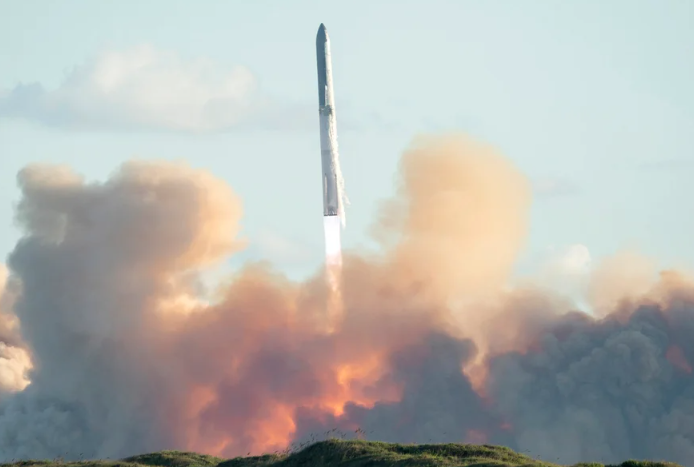
An October 2025 test flight of SpaceX’s Starship. Gabriel V. Cardenas/AFP via Getty Images
|
|
- Tomorrow SpaceX will conduct a test flight of its Starship V3—the largest version of its megarocket at 407 feet (124 meters) tall when fully stacked. The launch was delayed after the death of a Starbase worker last week. | 2 min read
- The last 12 months in the U.S. were the hottest since record keeping began in 1895. March was a whopping 9.35 degrees Fahrenheit hotter than the 20th-century average for the month. | 2 min read
- Speaking of warm weather, extreme heat is breaking records in the eastern U.S. A "Bermuda high" parked over the western Atlantic is pulling sweltering air up from the south. | 2 min read
- Some extinct human ancestors appear to share wrist traits with modern-day apes, suggesting our ancient predecessors walked on their knuckles. | 3 min read
- The Colorado Avalanche is dominating the National Hockey League. Training and playing the game some 5,000 feet above sea level may give their athletes a performance boost. | 4 min read
- Ebola vaccines exist, but not for the strain in the current outbreak, called Bundibugyo. | 3 min read
- Sharla Perrine Boehm, a math teacher, spent her summers coding. She went on to work for the RAND corporation, where her work laid the groundwork for the modern Internet. | 27 min podcast
- If you switch a lamp on and off an infinite number of times, you will certainly enrage anyone in the room. But will the light end up on or off? Somehow math says both. | 4 min read
|
|
|
Everyday Quantum Computing
|
Yesterday I wrote about the incredible promise and challenges of quantum computing, and a bit of the ins and outs of how it works (hope I didn’t fry your mind). We’re back today to talk about the real-world applications of this technology. Assuming scientists can scale up the number of qubits in their machines and figure out how to correct for quantum errors that arise, what could a quantum computer really do?
Cryptography: One day soon, quantum computers may be able to break RSA encryption, a long-standing protocol used worldwide to secure bank transfers, cryptocurrencies and digital communication. RSA is based on multiplying large prime numbers. Classical computers could test successive numbers sequentially to reveal the code, but it’s relatively infeasible with very large numbers. Quantum qubits on the other hand can exist as multiple values at once, so they might be able to quickly figure out an RSA key. Some experts think RSA could be broken in the next five to 10 years.
Particle physics: Quantum computers, unsurprisingly, can be used to simulate…quantum physics. Last year two teams independently published real-time quantum simulations of the creation of matter and antimatter during a process called string breaking. According to the Standard Model of particle physics, pairs of strongly interacting subatomic particles, such as quarks, behave as though they are joined by an elastic string. The two simulations showed antimatter-matter pairs arising from breaking this string.
Materials science: One day, quantum computers might be able to generate blueprints to create novel molecules for new kinds of batteries, rare earth elements, or even new drugs. Researchers hope quantum computers could be used to generate materials with superconductivity, which involves the free flow of electrons without resistance and would be invaluable to creating ultra-efficient power grids or advanced MRI scanners.
AI: Artificial Intelligence systems are already adept at finding patterns in vast datasets. Operating an AI based on a quantum network, though, could allow AI systems to be trained faster and with fewer power demands. The biggest impact would be if quantum processors could one day be used to analyze quantum data directly. For example, a quantum AI could riff on the molecular structure of an existing drug and generate different configurations of it. It could assess those molecules and determine whether they’re worth developing before a company even pursues them.
What the experts say: “That’s the beauty of quantum computing. We can potentially solve problems that are unsolvable today,” says Subodh Kulkarni, CEO of quantum computing company Rigetti Computing. “We’re talking a million [or a] billion times faster at a very, very small fractional energy consumption.
Want to learn more about the practical applications of quantum computing? Tune in tomorrow for a virtual panel with our physics and technology editors as they discuss what’s real and what’s hype in the quantum computing world.
|
|
|
|
|
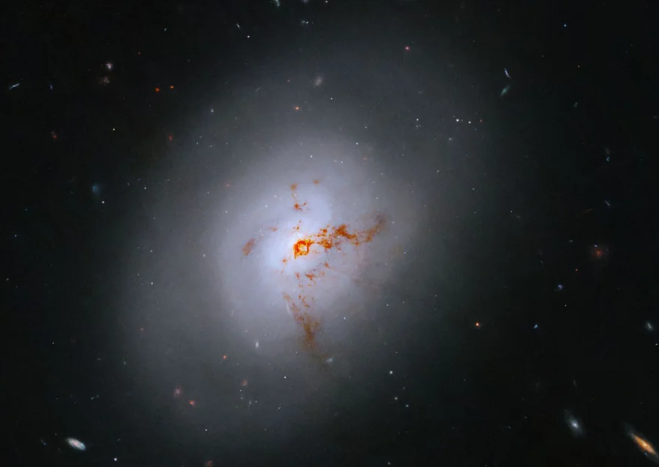
NASA/ESA/K. Alatalo/STScI (image); G. Kober/NASA/Catholic University of America (image processing)
|
|
- Located 100 million light-years from Earth in the constellation Eridanus, the galaxy, called NGC 1266, is what’s known as a lenticular galaxy. Most of the galaxies in our region of the universe are young, vibrant and bursting with freshly born stars, or they are more sedate, elliptical galaxies that have minimal star formation. Just 1 percent are somewhere in between. NGC 1266 has the lenslike, flattened disk shape and bright central bulb of a spiral galaxy. But it has no spiral arms and—like an elliptical galaxy—appears to have little to no ongoing star formation. Read more.
|
|
- Wild idea: Using fire tornados to clean up oil spills at sea. | EOS
- A lack of research on lactation is leaving new mothers struggling with breastfeeding with few options and bad advice. | The Economist
- A prominent herpetologist in Ecuador has identified many new species and done much to boost conservation there. But he's surrounded by controversy. | Science
|
|
It's remarkable that some of the most ground-breaking technological developments of our time all seem to flirt with disaster: Quantum computing could crack the cryptography that underpins global banking; AI could upend the labor market in a matter of years; gene editing science could give humans influence over our own evolution. The future’s most powerful tools are often indistinguishable from controlled destabilization.
|
|
How are you feeling about the pace of progress? Let me know by emailing: newsletters@sciam.com. I'll be back tomorrow.
—Andrea Gawrylewski, Chief Newsletter Editor
|
|
|
|
|
Subscribe to this and all of our newsletters here.
|
|
|
|
|




Comments
Post a Comment